
South Korea Crypto Regulation and Market Updates 2026
Explore South Korea crypto regulation 2026, exchange restrictions, bitcoin-backed loans, and market risks for traders and companies.
The quick list
Best overall: KoFIU-registered exchanges, for South Korean residents who need regulated won access and lower platform-closure risk.
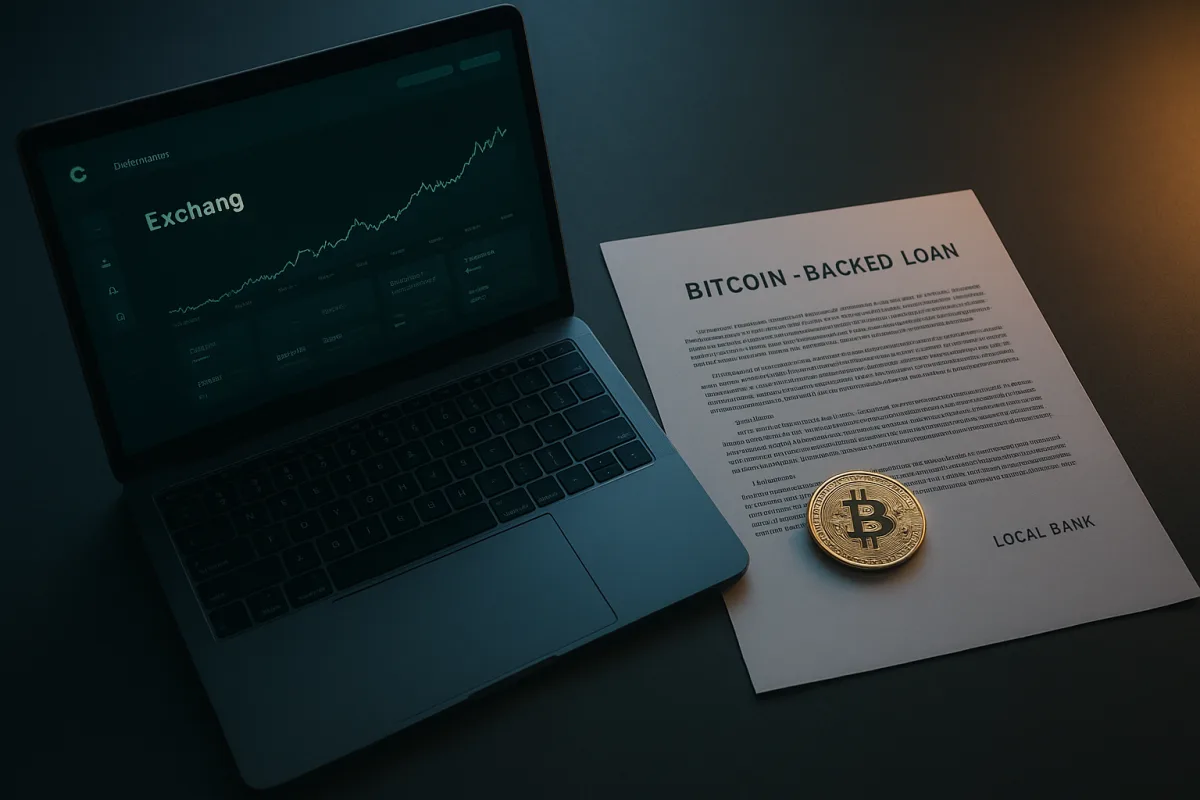
Best for corporate liquidity: Jeonbuk Bank’s Bitcoin-backed loan, for eligible companies seeking won working capital against Bitcoin rather than a retail trading product.
Best avoided for local access: Blocked offshore exchanges including KuCoin and MEXC, for users who accept that Korean website access and eventual withdrawals may be disrupted.
Best treated as market noise: Unattributed Bitcoin whale-transfer reports, for readers assessing flows without assuming a transfer represents South Korean demand or selling pressure.
South Korea’s crypto market is becoming more expensive in compliance terms and more constrained in venue choice, but it is also gaining a limited route into bank credit. For a trader, company treasurer or market observer, the practical decision is whether regulated local access outweighs broader offshore liquidity.
The immediate risk sits with assets already held on unregistered platforms. The Financial Intelligence Unit, or FIU, has acknowledged that blocks could make withdrawals harder, meaning the regulatory action affects more than future sign-ups or app downloads. [1][13]
That distinction matters because South Korea is not simply banning cryptocurrency activity. It is separating registered venues, where anti-money-laundering supervision applies, from offshore operators that have not met domestic reporting requirements. Registration is not a guarantee of conduct, solvency or customer reimbursement. [5][14]
The comparison: access, cost and market risk
| Option | Price or cost disclosed | Size and scope | Structure | Main trade-off | Best suited to |
|---|---|---|---|---|---|
| KoFIU-registered exchanges | Trading fees vary by venue and were not supplied in public registration data | 28 registered exchanges as of Oct. 9, including Upbit, Bithumb, Coinone, Korbit and Gopax [[6]](https://whichcryptoexchange.com/kr/?utm_source=openai "Crypto exchanges registered in South Korea (2026) | whichcryptoexchange.com") | Domestic AML-supervised exchange access, generally built around verified customer accounts and Korean compliance controls | Fewer venue choices and potentially less access to offshore products or liquidity |
| Blocked offshore exchanges | Fees vary, but authorities cited risks of excessive charges [1] | 27 websites blocked, including KuCoin, MEXC, BingX, Phemex, Bitrue, Poloniex, BitMart, DigiFinex, CoinW, BTCC and XT.com [1][2] | Overseas platforms deemed to target Korean users without local registration | Website blocks, app restrictions and withdrawal disruption | No longer a dependable route for Korean-based users |
| Jeonbuk Bank Bitcoin-backed corporate loans | Interest rate, loan-to-value ratio and liquidation thresholds not disclosed | First reported won-denominated Bitcoin-backed bank loan product, initially for corporate working capital [[7]](https://coinmarketcap.com/academy/article/south-koreas-jeonbuk-bank-launches-bitcoin-backed-business-loans?utm_source=openai "South Korea's Jeonbuk Bank Launches Bitcoin-Backed Business Loans | CoinMarketCap")[9] | Bitcoin held by a registered specialist custodian, with bank recovery through enforcement and sale procedures | Collateral volatility and untested enforcement mechanics |
| Reported Bitcoin whale transfers | One reported transfer was roughly 500 BTC, valued around $33 million at the time [[10]](https://www.theblock.co/news/markets/2026-03-27-early-bitcoin-whale-sends-33-million-binance-extending-long-running-exchange-deposits-395490?utm_source=openai "Early bitcoin whale sends another $33 million to Binance, extending long-running exchange deposits | The Block") | A single large transfer, without verified Korean attribution | On-chain movement to Binance, not proof of a sale or national market trend | Easy to overinterpret as bearish, bullish or South Korean |
The headline regulatory number is 27 blocked websites. That is large relative to the 28 exchanges registered with the Korea Financial Intelligence Unit, but it does not mean all 27 operated at the same scale or served identical customers. [1][6]
The blocked group includes global brands such as KuCoin, MEXC, BingX and Phemex, alongside Bitrue, Poloniex, BitMart, DigiFinex, CoinW, BTCC and XT.com. The common issue is local registration, not a published finding that every platform mishandled customer assets. [1][2]
South Korean authorities assess whether overseas platforms are serving domestic users through factors including Korean-language services, marketing directed at Korean residents and support for won-denominated activity. That framework makes location less relevant than whether a service effectively targets the local market. [1][14]
For users, the price comparison is incomplete because neither the blocked platforms nor registered local exchanges can be reduced to a single trading-fee figure. Spreads, withdrawal charges, token availability, liquidity and fiat on-ramp access can matter more than a listed maker-taker rate.
The compliance cost is clearer. Registered operators must submit detailed information on operations, financial soundness, staffing, technology systems and internal controls, while major shareholders and executives face screening for certain criminal and economic offences. [3][4]
They must also comply with customer due diligence, suspicious-transaction reporting and travel-rule obligations. Those requirements can raise operating costs and reduce anonymity, but they establish an identifiable domestic entity subject to AML supervision. [5][14]
That is not the same as an endorsement. A KoFIU registration means an operator has entered the AML reporting regime. It does not certify every asset listing, trading practice, custody arrangement or customer outcome on a registered exchange. [5][14]
Option one: regulated exchange access
For ordinary South Korean users, registered platforms are the functional default after the latest website blocks. The registered group includes Upbit, Bithumb, Coinone, Korbit and Gopax, although the complete market contains 28 registered exchanges rather than only those five larger names. [6]
The layout of this option is straightforward: verified customer accounts, domestic compliance procedures and continued local availability. The trade-off is that a user cannot assume that every offshore perpetual, altcoin, yield product or liquidity pool will be replicated locally.
Authorities had already restricted app downloads and updates for unregistered platforms through Apple and Google channels before moving to website blocking. The October measure therefore closes another access route rather than creating the first restriction. [1][13]
The FIU had referred 44 unregistered operators to authorities by October, including 12 referrals in June. That enforcement history suggests the 27-site action should be viewed as part of an ongoing compliance campaign, not a one-off intervention. [13][14]
For holders with assets on a blocked venue, withdrawal access is the operational question. The FIU said it intended to provide guidance through the Digital Asset eXchange Alliance, or DAXA, but that does not eliminate the risk of delay or platform-specific restrictions. [1]
Option two: Jeonbuk Bank’s Bitcoin-backed corporate loan
Jeonbuk Bank has introduced won-denominated loans secured by Bitcoin, initially for corporate borrowers seeking working capital. The product matters because it brings Bitcoin collateral into a bank lending structure without requiring the lender itself to take custody of the coins. [7][9]
Its layout differs sharply from an exchange margin loan. Bitcoin is held through a specialised custodian limited to virtual-asset service providers registered under South Korea’s reporting law, while loan proceeds are intended for business expenses rather than speculative trading. [9][12]
The bank says it selected Bitcoin because it has the largest market capitalisation and trading volume among digital assets, and because internal stress testing found it could function as collateral during sharp declines. That is the bank’s risk assessment, not proof that collateral values will remain adequate. [9]
The important missing price information is material. Public reports did not disclose interest rates, collateral haircuts, loan-to-value limits, top-up requirements, liquidation triggers or maximum borrowing amounts. Without those terms, borrowers cannot compare its all-in cost against conventional bank credit. [7][12]
Default also does not appear to result in Jeonbuk Bank simply taking the pledged Bitcoin. Reporting describes recovery through enforcement procedures, including court-supervised sale, after Civil Enforcement Rules were amended effective October 1. [9][12]
That structure reduces direct bank custody exposure but introduces legal and timing uncertainty. In a fast decline, the value of Bitcoin can move faster than an enforcement process, while third-party custody and stressed-market liquidity add separate operational risks.
The February Bithumb error illustrates the local market’s sensitivity. A staff member reportedly entered 620,000 BTC rather than a Korean won amount, creating a discrepancy described as roughly $40 billion and contributing to a 17% BTC/KRW price fall. [8]
That incident was not a Bitcoin whale sale, nor evidence that Jeonbuk’s product is unsafe. It does, however, demonstrate why Bitcoin collateral cannot be assessed only through global dollar prices when the loan, borrower and trading venue are tied to the won market.
Option three: offshore access after the blocks
The blocked exchanges may still offer features that local venues do not, such as broader token lists or derivatives products, but those benefits have become less useful for South Korean customers if normal web access, app support and withdrawals are uncertain.
Authorities cited risks including fraud, asset theft, data leakage and excessive fees when explaining action against unregistered operators. Those are stated regulatory concerns, not findings that each named exchange committed every alleged harm. [1][13]
The practical trade-off is therefore between breadth and continuity. An offshore platform may advertise more markets, but a locally registered venue is more likely to remain reachable through the regulatory framework South Korean customers are required to use.
This is also a market-consolidation event. The restrictions can shift retail volume toward the registered domestic group, though there is no public figure in the supplied reporting that measures how much volume has already moved from blocked platforms.
Stablecoin data points in the same direction of cross-border sensitivity, but should not be confused with Bitcoin flows. South Korean exchanges reported 14.92 trillion won in stablecoin outflows over 18 months, a substantial number that does not establish a Bitcoin whale trend. [11]
Whale movements: what the evidence does and does not show
Large Bitcoin transfers are often treated as trading signals, especially when coins move to an exchange. That interpretation is speculative because a transfer may reflect custody reorganisation, collateral management, internal exchange operations or an intended sale that never occurs.
One early Bitcoin holder reportedly sent about 500 BTC, worth roughly $33 million, to Binance in March. Public reporting did not verify that the wallet holder, recipient activity or economic motivation was connected to South Korea. [10]
That omission is central to this comparison. Unlike the exchange blocks and Jeonbuk’s lending product, which have named Korean institutions and defined legal structures, the whale narrative lacks a demonstrated South Korean link.
There is also no basis in the available reporting to combine the Bithumb issuance error, stablecoin outflows and the Binance transfer into one bullish or bearish thesis. They describe different assets, mechanisms and participants. [8][10][11]
Bitcoin price predictions built on these events would therefore exceed the evidence. Regulatory consolidation could alter local liquidity, and bank lending could create modest institutional demand, but neither establishes the scale or timing of net Bitcoin buying or selling.
Who each option suits
KoFIU-registered exchanges suit South Korean residents who value reliable local access, verified fiat rails and a supervised counterparty framework. They are not necessarily the lowest-cost or broadest-market choice, but they carry less immediate access risk than blocked unregistered sites. [5][6]
Jeonbuk Bank’s Bitcoin-backed loan suits eligible corporate borrowers with Bitcoin holdings and a defined working-capital need. It does not suit retail users looking for a simple way to borrow against coins, because the reported launch is corporate-only and core commercial terms remain undisclosed. [7][9]
Blocked offshore exchanges suit no South Korean user seeking dependable domestic access after the FIU action. Existing customers may still need to focus on withdrawal procedures, but new use involves material uncertainty around access, compliance and support. [1][13]
Whale-transfer monitoring suits analysts who distinguish observable blockchain movement from economic intent. It does not suit anyone looking for a stand-alone trading signal, particularly when the alleged South Korean connection has not been established in public reporting. [10]
Frequently Asked Questions
Which crypto exchanges are registered in South Korea in 2026?
As of October 9, 2026, 28 exchanges are registered with the Korea Financial Intelligence Unit (KoFIU). Notable registered platforms include Upbit, Bithumb, Coinone, Korbit, and Gopax. Registration involves AML supervision but does not guarantee product approval or customer reimbursement.
What are the risks of using unregistered crypto platforms in South Korea?
Unregistered platforms pose risks beyond Bitcoin price volatility, including custody, enforcement, and withdrawal difficulties. The Financial Intelligence Unit has blocked 27 such overseas exchange websites due to concerns about asset theft, fraud, data leaks, and excessive fees. Withdrawal disruptions are a particular concern for users with existing assets on these platforms.
How does Jeonbuk Bank's bitcoin-backed loan work for corporations?
Jeonbuk Bank offers won-denominated corporate loans secured by Bitcoin collateral held by registered third-party custodians. Enforcement of collateral liquidation is subject to court-supervised procedures under updated Civil Enforcement Rules effective October 1, 2026. Specific loan terms such as interest rates and loan-to-value ratios have not been publicly disclosed.
What impact do South Korea's crypto website blocks have on users?
Blocking 27 unregistered overseas crypto exchange websites restricts Korean users’ access to those platforms, potentially disrupting withdrawals and trading activities. This regulatory action affects not only new sign-ups but also users who already hold assets on these platforms, making withdrawals harder and increasing custody risks.
How is South Korea regulating cryptocurrency exchanges in 2026?
South Korea requires virtual asset service providers (VASPs) to register with the Korea Financial Intelligence Unit under the Act on Reporting and Using Specified Financial Transaction Information. Registration involves detailed reporting, criminal background checks for major shareholders and executives, and compliance with enhanced AML obligations. As of October 2026, 28 exchanges have registered, while unregistered platforms face website blocks and other restrictions.
How we researched this
This article was assembled from 5 published articles, 14 cited references.
Nothing here is based on hands-on testing. Where a figure or finding appears, it belongs to the source cited beside it, and the writing says so rather than implying otherwise. Every source is listed below so you can check it.
Sources
South Korea moves to block 27 crypto websites, including KuCoin, MEXC — Cointelegraph
South Korean Lender Jeonbuk Bank to Offer Bitcoin-Backed Loans — Bitcoin Magazine
Australia proposes leverage caps for crypto-settled derivatives — Cointelegraph
BTC price support holds ahead of US CPI data: Three things Bitcoin traders need to know this week — Cointelegraph
Kraken parent clears Dubai’s final hurdle for dirham trading rollout — Cointelegraph
South Korea Restricts 27 Crypto Websites, Including KuCoin and MEXC
South Korea Blocks KuCoin, MEXC, BingX and 24 Other Crypto Exchange Websites
Korea's Specified Financial Information Act: Crypto shareholder screening - Koreanics
Crypto exchanges registered in South Korea (2026) | whichcryptoexchange.com
South Korea's Jeonbuk Bank Launches Bitcoin-Backed Business Loans | CoinMarketCap
South Korea Reports 14.92 Trillion Won in Stablecoin Outflows | TokenPost
South Korea’s Jeonbuk Bank Rolls Out First Bitcoin-Backed Loans - KryptoNews
South Korea moves to block 27 unregistered overseas crypto exchanges — LeoDex News
Related Articles

Crypto Regulatory and Political Developments Shaping 2026
Explore key crypto regulatory and political developments in 2026, including the Clarity Act, EU MiCA, and industry election spending impacts.

Crypto Regulatory Challenges
Explore crypto regulatory challenges, legal risks, and compliance costs shaping stablecoins, blockchain records, and cross-border crypto markets.

XRP Surges 10% as SEC Drops Case: Ripple's Legal Victory and Market Impact
XRP skyrockets 10% to $247 as SEC drops case against Ripple. Legal victory sets precedent for crypto industry. Ripple's $200M defense fund defends entire market. Altcoins surge; XRP in the lead. CryptosRUs teases DCA night livestream for more insights.
Bitcoin-Backed Mortgages and Crypto Credit Lines Explained
Learn how Bitcoin-backed mortgages and crypto credit lines work, their collateral needs, risks, and custody details for U.S. borrowers.