
Bitcoin-Backed Mortgages and Crypto Credit Lines Explained
Learn how Bitcoin-backed mortgages and crypto credit lines work, their collateral needs, risks, and custody details for U.S. borrowers.
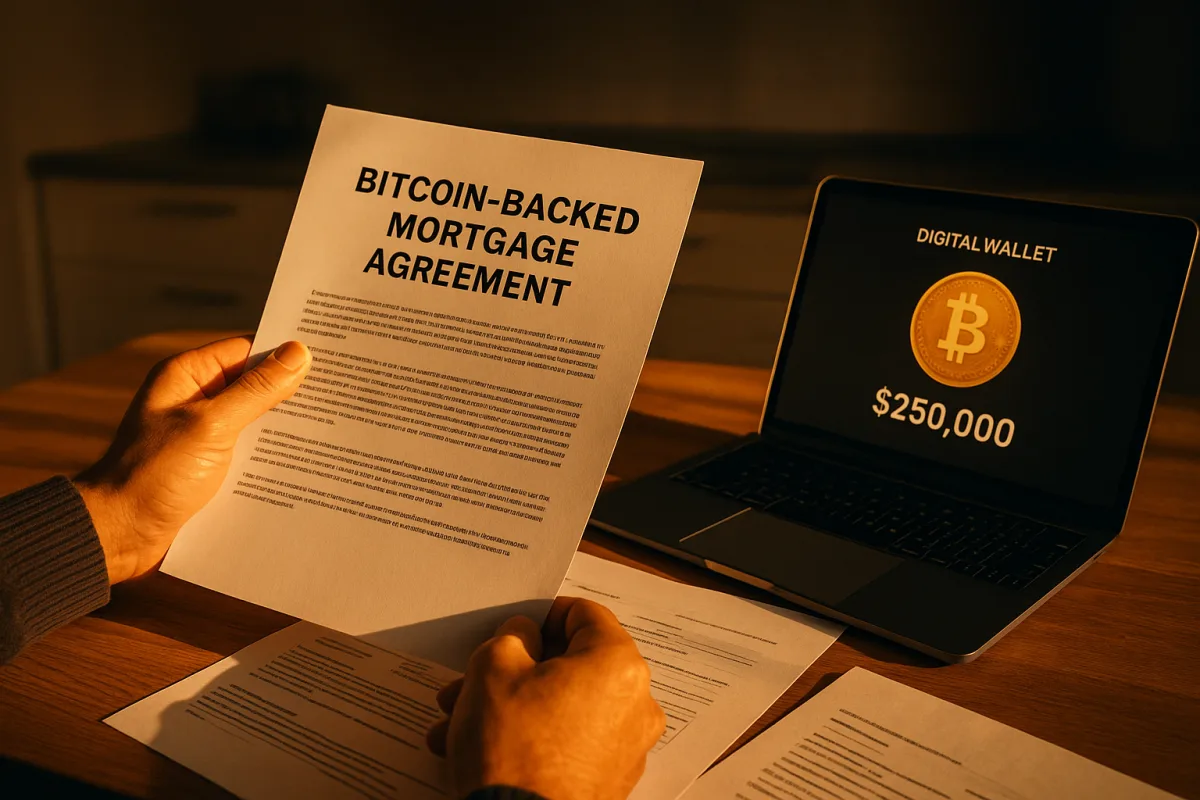
Bitcoin-Backed Mortgages and Crypto Credit Lines: The Practical Constraints Behind the Pitch
Start with the cash problem you are trying to solve
The immediate appeal is straightforward. A homeowner with a large Bitcoin position may want to make a down payment without selling Bitcoin, realizing gains, or losing exposure to any future price increase.
Better Mortgage and Coinbase launched such a structure in August 2026. It combines a conventional Fannie Mae-backed mortgage with a separate Bitcoin-secured loan used for the down payment, while presenting the borrower with one monthly payment. [1]
The risk appears in the product’s collateral math. The Bitcoin is not treated like cash dollar for dollar, and borrowers are not simply using an exchange balance as proof of wealth.
Coinbase’s published example requires Bitcoin worth at least 250% of the down payment loan. A buyer seeking a $100,000 down payment loan would need to pledge approximately $250,000 of Bitcoin. [2]
That means the lender is effectively recognizing about 40 cents of borrowing capacity for each dollar of pledged Bitcoin. This is materially more conservative than many crypto credit lines, which commonly begin around 50% to 60% loan-to-value, or LTV. [5]
The difference matters when calculating whether the arrangement truly avoids a sale. A prospective buyer with $250,000 of Bitcoin may borrow only $100,000 toward the down payment, while still needing to qualify for the remaining mortgage balance.
Establish whether a mortgage is even the right product
A mortgage-backed structure is designed for someone already buying or refinancing a home, not for someone seeking flexible cash. The mortgage is secured by the property, while the Bitcoin-secured down payment facility is a second, linked obligation. [3]
The conventional mortgage rate is therefore only one component of the cost. As of August 27, 2026, reported benchmark rates for conventional fixed mortgages were 6.52% for 30-year loans, 5.92% for 15-year loans and 6.45% for 20-year loans. [17]
Those figures are market benchmarks, not a promise of a Better Mortgage rate. The borrower’s final quote depends on the loan structure and underwriting, while the Bitcoin-backed component must be evaluated alongside the home loan rather than separately.
Better and Coinbase state that the two loans carry the same interest rate and amortization term, with repayment consolidated into one monthly payment. [14] That does not eliminate the need to request the full payment schedule before proceeding.
The product is available to U.S. residents with verified Coinbase accounts, subject to Better’s credit, income and other underwriting conditions. [14] However, this should not be mistaken for an industry-wide standard.
The Federal Housing Finance Agency has asked Fannie Mae and Freddie Mac to develop proposals for considering cryptocurrency held on regulated U.S. exchanges in mortgage risk assessments. Final nationwide crypto-mortgage underwriting standards had not been established as of mid-2026. [1]
That gap is important. A lender can offer a product today, but applicants should not assume a different lender will recognize the same assets, custody arrangements, income sources or collateral valuations next month.
Ask where the Bitcoin goes before comparing interest rates
The operational compromise is custody. Under the Better-Coinbase arrangement, pledged Bitcoin is transferred to a custodial account at Coinbase Prime, rather than remaining in a wallet controlled by the borrower. [14]
That transfer changes the transaction from a self-custodied asset holding into a contractual claim governed by loan documents, custodial terms and the lender’s remedies. The borrower retains economic exposure, but not direct ability to move the pledged coins.
This is not a minor administrative detail. Qualified custody can reduce operational risks around key loss and settlement, but it also creates counterparty, access and documentation risk if a borrower needs to refinance or unwind the loan quickly. [13]
Before transferring collateral, request confirmation of the custodian, whether assets may be rehypothecated, the withdrawal conditions and the process if the lender fails. Arch Lending has specifically emphasized qualified custody and no-rehypothecation arrangements as central issues in Bitcoin lending. [13]
Arch Lending offers crypto-backed loans using institutional custody, including arrangements involving Anchorage Digital Bank. [9] It may suit borrowers who prioritize a stated qualified-custodian model, but the published materials should still be checked for current rates, LTV limits and eligible jurisdictions.
Understand the unusual no-margin-call feature
The Better-Coinbase mortgage differs sharply from a standard Bitcoin-backed line because a Bitcoin price decline by itself does not trigger a margin call or alter the mortgage terms. [14]
Instead, Better may liquidate the pledged Bitcoin if the borrower becomes 60 days delinquent on mortgage payments. [14] This protects borrowers from having to add collateral during a sudden market drop, but it does not make the obligation low risk.
The tradeoff shifts more market risk to the lender. It remains too early to know whether lenders can sustain broad no-margin-call offerings through prolonged Bitcoin drawdowns, especially because crypto-mortgage standards are still developing.
Milo, another crypto mortgage provider, has marketed a no-margin-call approach. [7] That may suit a borrower focused specifically on avoiding price-triggered liquidation, but no-margin-call policies should be read alongside default provisions, interest costs and collateral-release terms.
The practical question is not simply whether a product has a margin call. It is what event permits liquidation, how much notice is required, whether partial liquidation is possible, and whether the borrower can refinance before collateral is sold.
Use a credit line only if you can manage LTV continuously
A crypto-backed credit line is usually the more direct product for a borrower who needs liquidity for business expenses, taxes, renovations or other non-housing uses. It is also generally the structure with greater price-volatility risk.
Galaxy Digital opened retail credit lines backed by Bitcoin, Ethereum and Solana, extending a product category once aimed largely at institutions to individual borrowers. [8] It may suit borrowers who hold one of those three major assets and need a conventional lending counterparty.
Unlike the Better-Coinbase mortgage, a typical credit line uses ongoing LTV monitoring. If crypto prices fall, the balance becomes too large relative to collateral and the borrower may receive a margin call, need to post more assets, repay cash, or face liquidation. [6]
Strike’s Bitcoin-backed loan product illustrates that tradeoff. Its reported liquidation threshold is 85% LTV, with a 72-hour margin-call recovery window after the company extended its prior process during heightened volatility. [18]
That may suit a borrower who wants a defined cure period rather than an immediate sale process. It does not remove the central problem: Bitcoin can move sharply enough that a 72-hour window may be insufficient if the borrower’s additional funds are also tied up in crypto.
Compare rates only after comparing liquidation mechanics
Advertised annual percentage rates range widely. Comparison research cited rates from about 1.9% APR for certain Nexo loyalty tiers to roughly 11.5% APR for Ledn loans, with terms ranging from open-ended facilities to 12 months. [12]
Those headline rates are not directly comparable unless the LTV, token requirements, custody model and liquidation fees also match. A 1.9% tiered rate can require conditions that do not apply to an ordinary borrower.
Roxom advertises a Bitcoin-backed credit line at 7.25% APR. [10] It may suit a borrower seeking a clearly advertised fixed starting rate, but the borrower should obtain the current collateral ratio, liquidation trigger and any origination costs before treating that figure as total borrowing cost.
Abra also markets the ability to borrow against crypto while maintaining exposure to the pledged asset. [11] That suits the basic use case of avoiding a voluntary sale, though “keeping upside” is not equivalent to keeping control of collateral or avoiding a taxable liquidation.
Nexo and Ledn are relevant comparisons for retail borrowers focused on established crypto-credit brands and published rate menus. [12] Their useful comparison point is pricing range, but their specific tiers, LTV choices and collateral rules can make actual terms diverge considerably.
Kraken’s 2026 comparison of crypto-loan platforms is useful as a market overview rather than a lender quote. [12] It may suit a borrower still mapping available structures, but product pages and loan agreements should supersede any comparison table.
SALT and Aave represent different risk categories. SALT is associated with lender-managed crypto-backed credit arrangements, while Aave is a non-custodial decentralized-finance protocol where borrowing and liquidation execute through smart contracts rather than a traditional lender process. [5]
Aave may suit technically competent users who specifically want on-chain collateral management. It also introduces smart-contract, oracle and wallet-management risks that do not apply in the same way to a Coinbase Prime or Anchorage custody arrangement.
Model the downside before signing
The key calculation is not whether Bitcoin might rise. That is speculation, and no lender’s collateral model validates a price forecast. The relevant scenario is a rapid fall while the borrower needs cash elsewhere.
For a standard credit line at 60% LTV, $100,000 of Bitcoin collateral supports a $60,000 loan. If Bitcoin falls 30%, the collateral becomes worth $70,000 and the LTV rises to about 86%, potentially above many liquidation thresholds. [5]
A mortgage structure with 250% collateralization starts with more room. A $100,000 down payment loan backed by $250,000 in Bitcoin would still have collateral worth $175,000 after a 30% decline, but the borrower remains exposed if payments are missed. [2]
The mortgage’s no-margin-call design can make cash-flow risk more important than price risk. A borrower who loses income or underestimates housing costs could see Bitcoin liquidated after delinquency, regardless of whether the asset later recovers.
Request a written answer on whether liquidation proceeds first repay principal, interest, penalties and sale expenses. Crypto-loan providers can impose liquidation or stabilization charges, and the absence of standardized disclosures makes assumptions unsafe. [5]
Account for tax, refinancing and the exit route
Borrowing against Bitcoin is generally not itself a taxable sale. The overlooked event is liquidation, which the Internal Revenue Service can treat as a disposition of crypto collateral and therefore a possible capital gain or loss. [16]
That can produce an unattractive sequence: collateral falls in value, the lender sells it, and the borrower still needs records to calculate and report the tax result. Tax treatment depends on individual facts, so borrowers should obtain specialist advice before pledging assets.
Finally, ask how collateral is released. Better and Coinbase state that pledged Bitcoin is returned after the mortgage is repaid or refinanced, subject to the loan terms. [14] Refinancing is therefore not merely a rate decision, it can determine when control of Bitcoin returns.
For a homebuyer, the conservative collateralization and no-margin-call mechanism may be preferable to a high-LTV credit line. For a retail borrower needing flexible liquidity, the central decision is whether they can monitor LTV and fund a margin call without selling into a stressed market.
Frequently Asked Questions
How do Bitcoin-backed mortgages work?
Bitcoin-backed mortgages combine a conventional home loan with a separate Bitcoin-secured loan used for the down payment. Borrowers pledge Bitcoin as collateral without selling it, and repayment is consolidated into one monthly payment covering both loans. The Bitcoin-secured loan requires a much higher collateral amount than the loan value, reflecting conservative underwriting.
What are the collateral requirements for Bitcoin-backed mortgages?
In the Better Mortgage and Coinbase product, borrowers must pledge roughly 250% of the loan amount in Bitcoin. For example, to secure a $100,000 down payment loan, about $250,000 worth of Bitcoin is required. This means the effective loan-to-value ratio is about 40%, which is more conservative than typical crypto-backed credit lines that often allow 50% to 60% LTV.
What risks are involved in crypto-backed credit lines?
Crypto-backed credit lines generally carry risks of rapid margin calls and forced liquidation triggered by Bitcoin price volatility or breaches of loan-to-value thresholds. Liquidation can create taxable events, potentially causing capital gains tax even if the borrower did not sell the asset voluntarily. Borrowers face the risk of losing pledged crypto if they cannot cure defaults quickly.
How does custody affect Bitcoin-backed loans?
Bitcoin used as collateral in these loans is typically transferred to a custodial account controlled by a qualified custodian, such as Coinbase Prime for Better Mortgage. This means the borrower does not retain direct control of the Bitcoin during the loan term. Custody arrangements impact borrower control and the operational handling of collateral in case of default.
Can Bitcoin-backed mortgages avoid taxable events?
A Bitcoin-backed mortgage may avoid triggering taxable events during normal operation since the borrower does not sell the Bitcoin. However, if the lender liquidates pledged Bitcoin due to missed payments (e.g., after 60 days of default), this forced sale is considered a taxable event by the IRS and may result in capital gains tax liability for the borrower.
How we researched this
This article was assembled from 7 published articles, 18 cited references.
Nothing here is based on hands-on testing. Where a figure or finding appears, it belongs to the source cited beside it, and the writing says so rather than implying otherwise. Every source is listed below so you can check it.
Sources
Better launches Bitcoin-backed mortgages powered by Coinbase — Cointelegraph
Galaxy Opens Retail Crypto-Backed Credit Lines on Bitcoin, Ethereum and Solana — Decrypt
Galaxy Opens Retail Crypto-Backed Credit Lines on Bitcoin, Ethereum and Solana — Decrypt
Bitcoin Stalls at 80k but Buyers Aren’t Backing Down Yet — FOREX.com
Why turmoil in the bond market is boosting gold and Bitcoin — WBFF
Galaxy Opens Retail Crypto-Backed Credit Lines on Bitcoin, Ethereum and Solana — Decrypt
Galaxy Opens Retail Crypto-Backed Credit Lines on Bitcoin, Ethereum and Solana — Decrypt
Crypto goes further mainstream with product tied to Fannie-backed mortgages
Bitcoin-Collateralized Loans: Rates, LTV, and Liquidation Compared | Spark
Bitcoin Loans and Margin Calls: A Growing Risk in Volatile Markets – OCNJ Daily
Galaxy Opens Retail Crypto-Backed Credit Lines on Bitcoin, Ethereum and Solana - Decrypt
Crypto-Backed Loans | Bitcoin, Ethereum & Solana Collateral | Arch Lending
Better Opens Bitcoin-Backed Mortgage Program With Coinbase Custody – Crypto Payments News
Strike Extends Margin Call Window for Bitcoin-Backed Loans as Volatility Intensifies
Related Articles
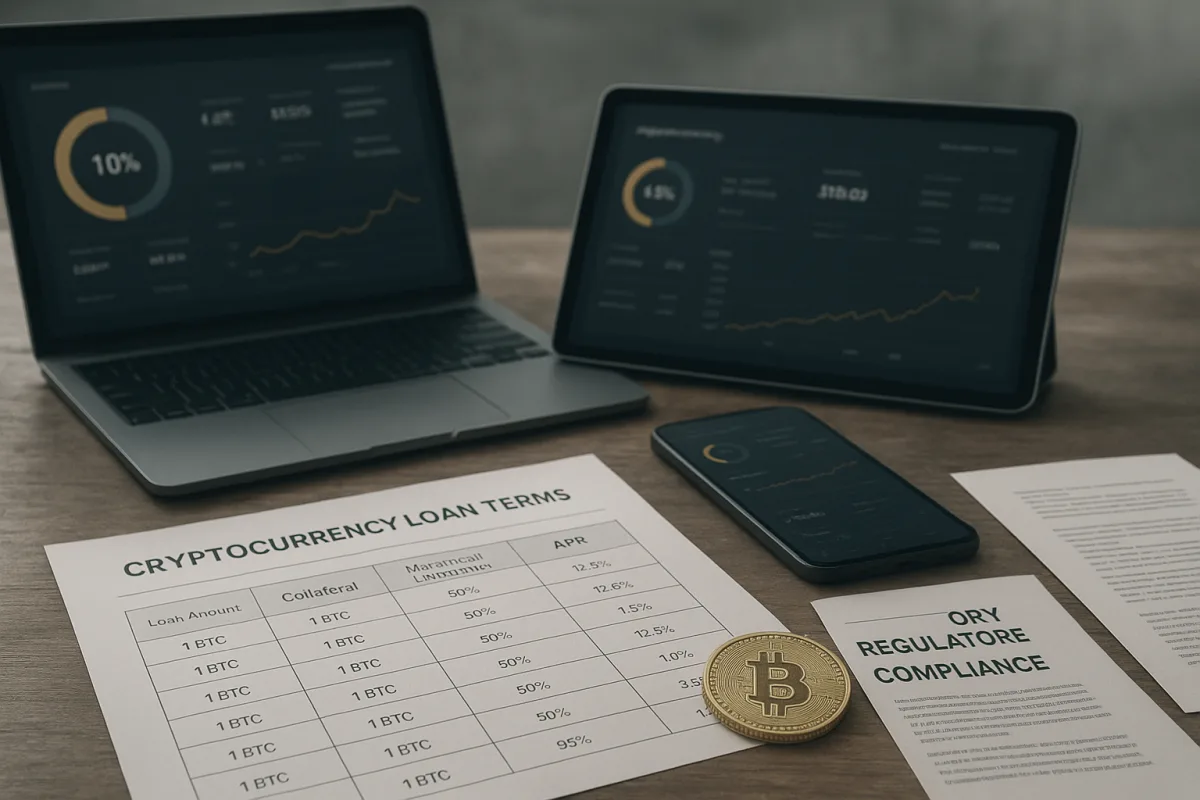
Bitcoin-Backed Digital Credit Growth and Lending Risks
Explore bitcoin-backed digital credit growth, lending risks, loan terms, and platform comparisons for informed borrowing decisions.
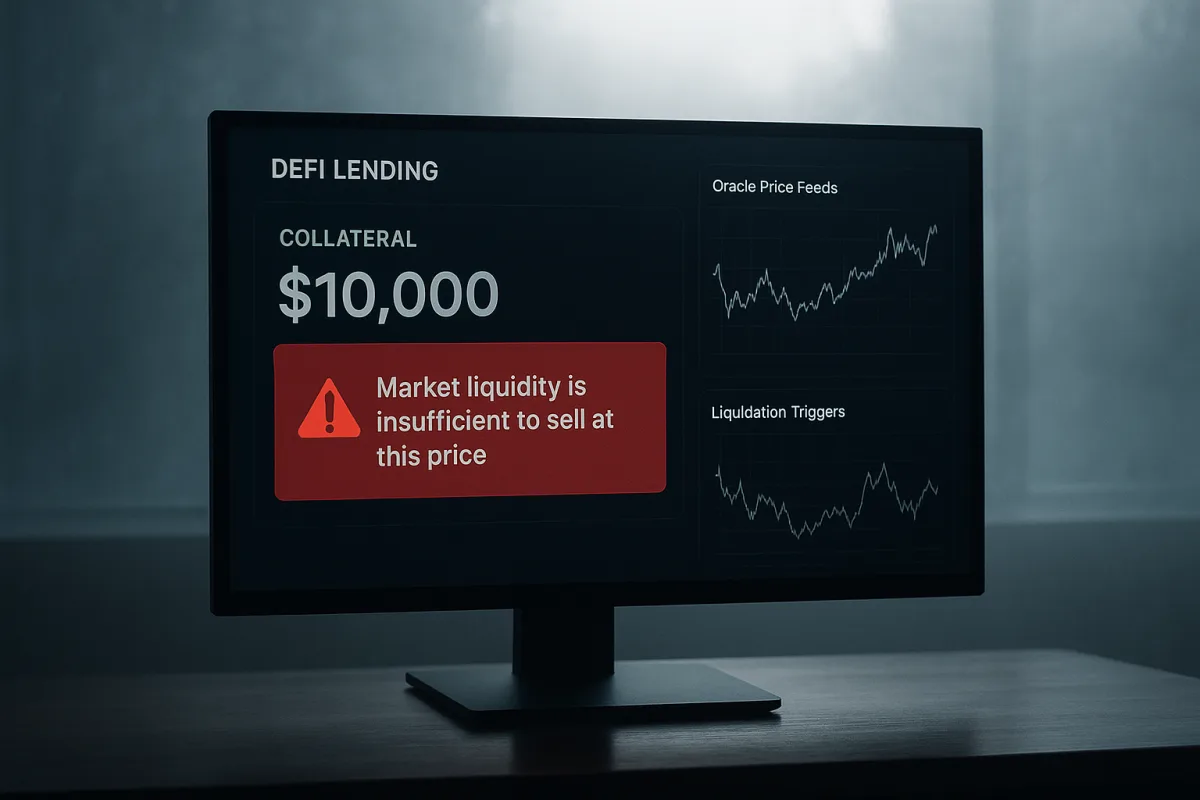
DeFi Collateral Liquidation Risks and Protocol Responses
Explore DeFi collateral liquidation risks, oracle price issues, and how protocols respond to security incidents and exploits.

Crypto Market Infrastructure and New Financial Products
Explore crypto market infrastructure and new financial products like volatility futures and tokenized settlements with key risks and usage insights.

Crypto Treasury Companies
Explore how crypto treasury companies raise capital and use warrants for institutional Bitcoin buying and the risks involved.