
Crypto Regulatory Updates 2026
Explore 2026 crypto regulatory updates including CFTC reserve guidance, prediction market rules, and South Korea's draft digital asset bill.
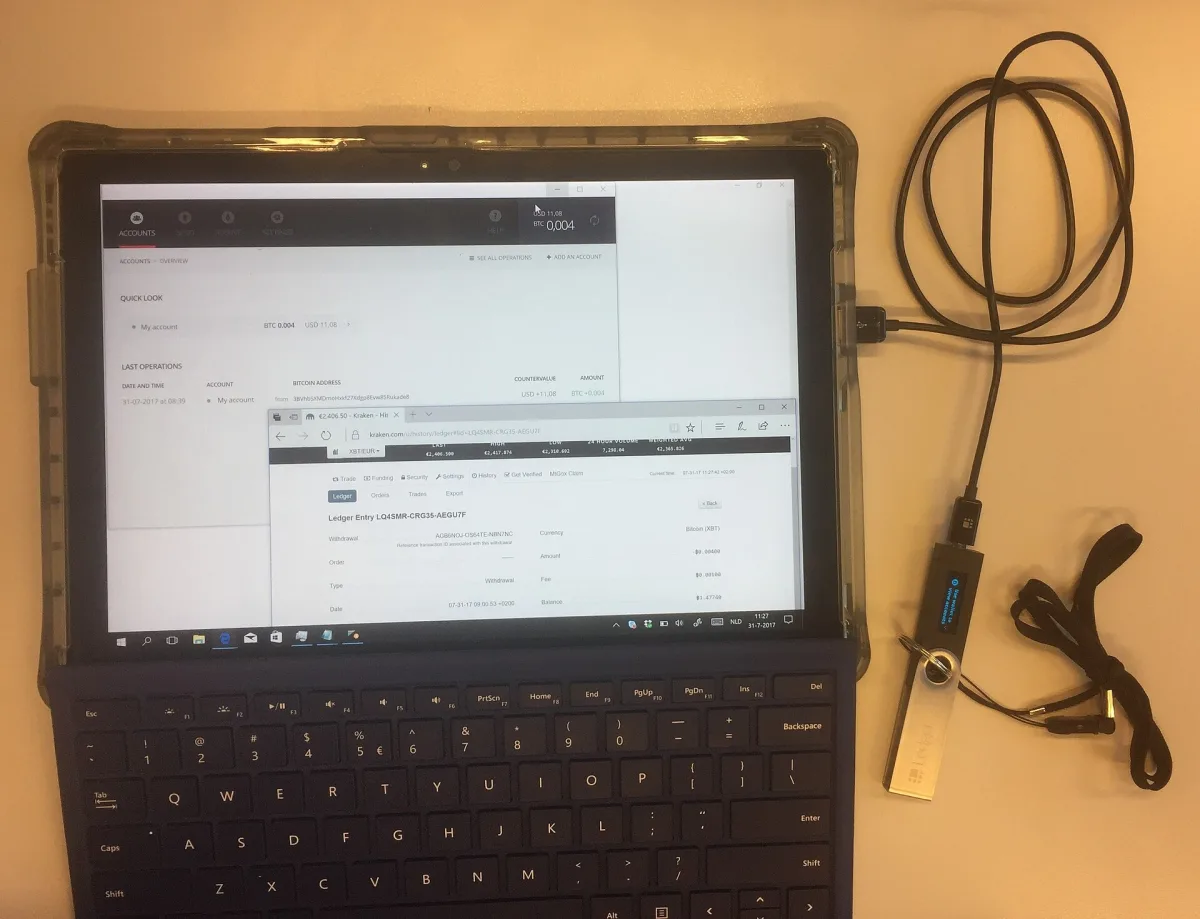
Photo: FlippyFlink, CC BY-SA 4.0, via Wikimedia Commons
The quick list
Best overall: CFTC crypto-reserve guidance, for regulated derivatives venues that need a defined way to hold BTC, ETH and stablecoins on balance sheet.
Best for event-contract operators: CFTC prediction-market reporting rules, for exchanges willing to absorb reporting and customer-data obligations.
Best for Korean token issuers: South Korea’s draft Digital Asset Industry Innovation and User Protection Act, for projects seeking a legal domestic fundraising route if lawmakers pass it.
Best for institutional-style trading: CME Group and Cboe, for traders prioritizing regulated market infrastructure over onchain access.
Best for small onchain trades: dYdX, Uniswap V3 and launchpads such as Pons, for users accepting smart-contract, wallet and liquidity risks.
Bitcoin traded around $59,500 as crypto’s total market capitalization fell to $2.04 trillion, according to CoinMarketCap data cited by Decrypt. The CFTC’s two fresh policy moves arrived while crypto sentiment sat at 9 out of 100.
The immediate risk is reading regulatory access as safety. A venue may be permitted to count crypto toward part of its reserves, while still needing cash-like assets for liquidity, and a token may trade freely while leaving holders exposed to wallet compromise or insider-heavy supply.
The CFTC’s reserve guidance: balance-sheet room, not cash access
The CFTC staff advisory lets swap execution facilities, designated contract markets and derivatives clearing organizations count Bitcoin, Ether and qualifying payment stablecoins toward financial resources covering at least 12 months of operating costs.[1]
This is a balance-sheet rule for regulated market infrastructure, not a rule allowing customer collateral to be held in volatile tokens. Firms can recognize some crypto as a longer-duration financial backstop, subject to valuation discounts.
BTC and ETH receive minimum 20% haircuts, meaning $100 million of market value can contribute only $80 million toward the requirement. Qualifying payment stablecoins receive a 2% haircut, leaving $98 million of recognized value per $100 million held.[1]
The constraint is the part that will cost firms real flexibility. Crypto cannot count toward separate liquidity requirements, which call for cash or highly liquid securities that can cover three months of costs for swap execution facilities and six months for designated contract markets and clearing organizations.[1]
Decrypt characterized the distinction as permission to use crypto as a corporate reserve asset, without accepting it as immediately spendable liquidity.[7] That means a regulated exchange seeking to hold BTC still needs a conventional cash buffer beside it.
The advisory is also staff guidance, not a Commission rule or no-action letter. It creates no enforceable right, and the CFTC’s eventual composition could alter the approach, so firms will still need to manage political and supervisory uncertainty.[7]
| Option | What it permits | Size or valuation rule | What remains unavailable | Main trade-off |
|---|---|---|---|---|
| CFTC crypto-reserve guidance | BTC, ETH and qualifying payment stablecoins in financial resources | 20% haircut on BTC and ETH, 2% on stablecoins | Liquidity-buffer treatment | More reserve flexibility, but cash-like assets remain necessary |
| CFTC prediction-market rule | Standardized reporting for certain event contracts | Large-trader trigger at 125,000 contracts or $125,000 notional | Automatic approval to list new contracts | Less reliance on no-action letters, more data collection |
| South Korean draft act | Domestic public token issuance, if enacted | KRW 5 billion minimum equity for stablecoin issuers | Unrestricted private issuance or bank-free won stablecoins | Onshore fundraising access, with disclosure and ownership controls |
Prediction markets: permanent reporting comes with a bigger file cabinet
The CFTC has replaced temporary reporting relief with permanent rules for certain fully collateralized event contracts. Exchanges will report these contracts through a framework closer to the reporting used for futures and options trading.[2]
CFTC Chairman Michael Selig called the prior no-action letters “band-aids for unworkable regulations,” according to Cointelegraph. The agency had issued 17 such letters before moving to a uniform reporting structure.[6]
The scale explains why the regulator acted. Exchanges certified roughly 1,600 event contracts for listing during 2025, compared with an average of five new listings annually from 2006 through 2020.
Large-trader reporting applies at 125,000 contracts or $125,000 in notional exposure. Operators also face daily trading and settlement reporting, giving the CFTC a much fuller view of who is concentrated in an event market.[2]
Within 12 months, exchanges must collect names, addresses, occupations and employers from customers. The agency says employment data can help identify traders with access to material nonpublic information or the ability to influence an event’s outcome.[4]
There is no published dollar estimate for compliance costs. Operators will need reporting technology, customer-information systems and personnel, while new exchanges still require CFTC approval before they can launch.
Some deadlines land earlier. Initial reporting begins within 60 days, while large-trader reporting is scheduled for July 26, 2027, and customer-identification obligations have a 12-month implementation period.[2]
The policy does not settle the larger legal conflict. The CFTC has sued 12 states that contend sports-related event contracts belong under state gambling law, and Congress is separately considering restrictions on contracts tied to war, terrorism, assassinations and individual deaths.
South Korea’s ICO proposal offers access, then adds controls
South Korea’s Financial Services Commission has proposed ending the ICO ban imposed in September 2017. The draft Act on Digital Asset Industry Innovation and User Protection would return token issuance to a supervised domestic framework, pending National Assembly approval.
For issuers, the gain is clear but conditional. Before a public sale, an issuer would file a digital-asset white paper detailing the project, issuance amount, use of proceeds and risks, while the FSC could review it and demand corrections.
False statements and omissions would expose issuers and executives to civil damages, financial penalties and possible criminal liability. Decrypt reported that the model resembles disclosure obligations used in Korean stock offerings.
The bill goes well beyond ICOs. It would cap a major shareholder’s stake in a crypto exchange at 20%, with a potential increase to 34% under FSC approval, and impose voting restrictions and corrective orders on parties exceeding the limit.
Won-backed stablecoins would start with an even tighter gate. Issuers would need at least KRW 5 billion in equity, and only consortiums controlled by commercial banks could issue them initially.
User protection provisions would require asset segregation and audits. Firms would also face no-fault liability for hack and IT-failure losses unless a user acted intentionally or with gross negligence, transferring some operational risk back to the platform.
For Korean projects that previously incorporated abroad, the proposal could lower the legal friction of fundraising at home. It remains a draft, though, and no launch timetable exists until lawmakers approve a final bill.
Market structure: similar charts, different plumbing
Crypto trading venues can look interchangeable on a price chart. The underlying arrangement determines who holds collateral, who matches trades, where liquidation occurs and what recourse exists if an operator, contract or wallet fails.
CME Group, with about 50,000 daily crypto derivatives contracts, and Cboe Global Markets, with roughly 30,000, sit on the regulated side of the market. They provide familiar exchange and clearing structures aimed largely at institutional and professional participants.
FTX US is listed in market-structure data with roughly $500 million in daily derivatives volume. Traders should separate a venue’s reported volume from its legal structure, custody design and the protections that apply to a specific product.
Onchain markets deliver a different layout. dYdX, an Ethereum-based perpetual futures venue, has reported more than $200 million in daily volume, while Uniswap V3 has been listed at about $100 million in spot and synthetic-derivative activity.
Kalshi, a CFTC-approved event-contract venue, has been reported around $10 million in daily volume. It is closer to the regulated event-market model now being standardized by the CFTC than to an open token launchpad.
| Venue or market type | Reported scale | Product layout | Collateral and custody model | Core risk for users |
|---|---|---|---|---|
| CME Group | About 50,000 daily contracts | Regulated BTC and ETH derivatives, including options | Centralized clearing and regulated infrastructure | Margin and leverage losses |
| Cboe Global Markets | About 30,000 daily contracts | Regulated crypto derivatives | Centralized exchange infrastructure | Product availability and leverage risk |
| Kalshi | About $10 million daily volume | CFTC-approved event contracts | Regulated event-contract exchange | Settlement and regulatory eligibility limits |
| dYdX | More than $200 million daily volume | Onchain perpetual contracts | Smart contracts and wallet-linked access | Smart-contract, liquidation and oracle risk |
| Uniswap V3 | About $100 million daily volume | Spot pools and synthetic exposure | Self-custody through onchain pools | Liquidity, contract and token risk |
| Pons | About $205 million cumulative fees by Nov. 20 | Meme-token launchpad on Robinhood Chain | User-signed transactions and locked liquidity pools | Concentrated supply, launch mechanics and unaudited contracts |
Launchpads show why token access is not market structure
Pons, a launchpad on Robinhood Chain, illustrates the gap between a technically non-custodial protocol and a market where buyers receive fair access. Its V1 launch costs 0.0005 ETH and charges a 1% trading fee.
V1 tokens have a fixed supply of 1 billion, with no creator allocation before trading opens. A launch graduates after 4.2 ETH has been paired in its pool by default, and liquidity is locked, according to Pons documentation cited by Decrypt.
V2 uses a bonding curve before moving tokens into a Uniswap V4 pool. Its 99% opening “snipe tax” decays over five seconds, but the creator and fee wallet are automatically exempt, and creators can designate up to 32 additional exempt addresses.
That setup produced allegations of structured extraction. Onchain analyst Wazz alleged that one operation took at least $18.43 million from 53 Robinhood Chain launches, while The Block confirmed exempt-wallet patterns in nine launches but did not independently verify the total.
Pons generated $5.95 million in fees on Sept. 3 and about $205 million cumulatively by Nov. 20, according to DeFiLlama figures reported by Decrypt. High fee revenue reflects turnover, not necessarily durable token value or fair launch conditions.
Uniswap’s rival Pools.trade charges a 0.25% trading fee, versus Pons’s standard 1%, and offers a crowd-launch feature intended to resist wallet bundling. By November, Pons still reported roughly $5.6 million in 30-day fees against Pools.trade’s $115,000.
Wallet security is part of market structure
The ANSEM token crash on Nov. 24 showed how custody choices can overwhelm every other feature of a trading market. A wallet associated with crypto influencer Ansem sold about 87.49 million ANSEM tokens, causing a roughly 60% drop in less than an hour.
CryptoSlate reported sales worth about 21,520 SOL from the wallet, while Bitquery tracked a 57% decline from $0.0367 to $0.0158. Initial claims of a hack drew skepticism because researchers identified wallet links predating the sales.
Bullpen, the trading platform co-founded by Ansem, later confirmed unauthorized transfers involving accounts opened during an early beta period. It said 18 to 19 accounts were affected, fewer than 0.005% of registered accounts.
Bitquery traced roughly $2.57 million in moved funds, including about $2.1 million from meme-coin sales. Bullpen had not disclosed the vulnerability, aggregate losses or compensation plans when Decrypt reported the incident.
The case is not proof of any token’s broader market quality. It is a reminder that importing a private key into a trading terminal grants control of that wallet to anyone who obtains the key.
Who each option suits
The CFTC reserve guidance suits regulated derivatives operators with long-duration financial-resource requirements and existing cash-management systems. It does not remove their need to fund immediate obligations with cash or highly liquid securities.
The prediction-market rules suit operators seeking a clearer federal reporting path for fully collateralized event contracts. They fit less well for firms unable to build customer-identification, employment-data and large-trader reporting systems on the CFTC’s timetable.
South Korea’s proposal suits domestic teams prepared to disclose token economics, use of proceeds and project risks under securities-style liability. It does not yet suit issuers needing certainty now, because the National Assembly has not passed the bill.
CME, Cboe and Kalshi suit participants who prioritize formal market infrastructure and defined regulatory oversight. dYdX, Uniswap V3 and Pons suit users who want wallet-based access, while accepting that smart contracts, liquidity design and token distribution can create separate risks.
Frequently Asked Questions
What are the latest crypto regulatory updates in 2026?
In 2026, the CFTC issued guidance allowing regulated derivatives venues to count Bitcoin, Ether, and qualifying payment stablecoins toward 12-month operating reserves with valuation haircuts. The CFTC also finalized permanent reporting rules for prediction-market operators, replacing prior no-action letters with standardized reporting and customer identification requirements. Additionally, South Korea proposed a draft digital-asset bill that could reopen domestic ICOs with disclosure rules, bank-led stablecoin issuance, and exchange ownership limits.
How does the CFTC's new crypto reserve guidance affect exchanges?
The CFTC's guidance permits regulated derivatives exchanges and clearing organizations to include BTC, ETH, and qualifying stablecoins in their financial resources covering operating costs, subject to a 20% haircut for BTC and ETH and 2% for stablecoins. However, these crypto assets cannot be used to satisfy liquidity requirements, which still require cash or highly liquid securities. This means exchanges gain some balance-sheet flexibility but must maintain separate cash-like liquidity buffers.
What reporting rules apply to crypto prediction markets?
Prediction-market operators must comply with permanent CFTC reporting rules that require daily reports on trading activity and settlement outcomes, customer identification within 12 months, and large-trader reporting triggered at 125,000 contracts or $125,000 notional. These rules replace previous no-action letters and increase compliance costs and operational complexity without resolving the state-versus-federal jurisdiction dispute.
What changes does South Korea's draft digital asset bill propose?
South Korea’s draft bill would allow domestic ICOs after a nine-year ban, requiring issuers to file detailed white papers with the Financial Services Commission and bear liability for disclosure errors. It mandates bank-led stablecoin issuance with a minimum KRW 5 billion equity requirement and limits exchange ownership stakes to 20%, extendable to 34% with approval. The bill also enforces user asset segregation, audits, and protections against losses from hacks or IT failures unless caused by user misconduct.
How do recent regulatory updates impact crypto market structure?
Recent updates maintain distinct risk and operational profiles between regulated derivatives venues and onchain exchanges. The CFTC’s reserve guidance supports regulated market infrastructure with balance-sheet recognition of crypto assets but requires cash liquidity buffers. Prediction-market reporting rules increase regulatory oversight and compliance costs. South Korea’s draft bill aims to create a legal domestic fundraising path with controls on issuance and exchange ownership, influencing market participation and structure.
How we researched this
This article was assembled from 7 published articles, 8 cited references.
Nothing here is based on hands-on testing. Where a figure or finding appears, it belongs to the source cited beside it, and the writing says so rather than implying otherwise. Every source is listed below so you can check it.
Sources
CFTC sets new prediction market rules as more firms seek US entry, Cointelegraph
What the CFTC’s New Crypto Reserves Guidance Actually Allows, And What It Doesn’t, Decrypt
Ansem claims wallet hack after an 87 million ANSEM token dump, but on-chain data raises questions, CryptoSlate
South Korea Moves to Lift Its ICO Ban After Nearly a Decade, Decrypt
Wall Street and Crypto Are in 'Extreme Fear'. What's Spooking Investors?, Decrypt
What Is Pons? The Robinhood Chain Meme Coin Launchpad Explained, Decrypt
Ansem Meme Coin Crashes After $2.57 Million Wallet Drain, Bullpen Confirms Security Breach, Decrypt
CFTC locks in permanent reporting rules for prediction market contracts
Prediction Market Exchanges Must Identify Traders Under New CFTC Rule - Unchained
CFTC adds permanent reporting rules for prediction markets amid legal disputes, COMPLETE iGAMING
CFTC Replaces 17 Prediction Market No-Action Letters With Uniform Reporting Rule | FXBrokerTrust
What the CFTC’s New Crypto Reserves Guidance Actually Allows, And What It Doesn’t - Decrypt
CFTC updates reporting rules for prediction markets and crypto reserves
Related Articles

South Korea Crypto Regulation and Market Updates 2026
Explore South Korea crypto regulation 2026, exchange restrictions, bitcoin-backed loans, and market risks for traders and companies.

Institutional Crypto Regulation 2026
Explore 2026 institutional crypto regulation updates, including EnsembleTX, SEC tokenized stock rules, Coinbase staking, and operational risks.

Crypto Regulatory Challenges
Explore crypto regulatory challenges, legal risks, and compliance costs shaping stablecoins, blockchain records, and cross-border crypto markets.

Crypto Regulatory Developments
Explore key crypto regulatory developments, legal challenges for prediction markets, and stablecoin compliance in the US, EU, and beyond.