
Market Reactions to Economic Signals in Cryptocurrency
Explore how economic signals from the U.S. Treasury and Pakistan's regulations impact cryptocurrency market reactions.
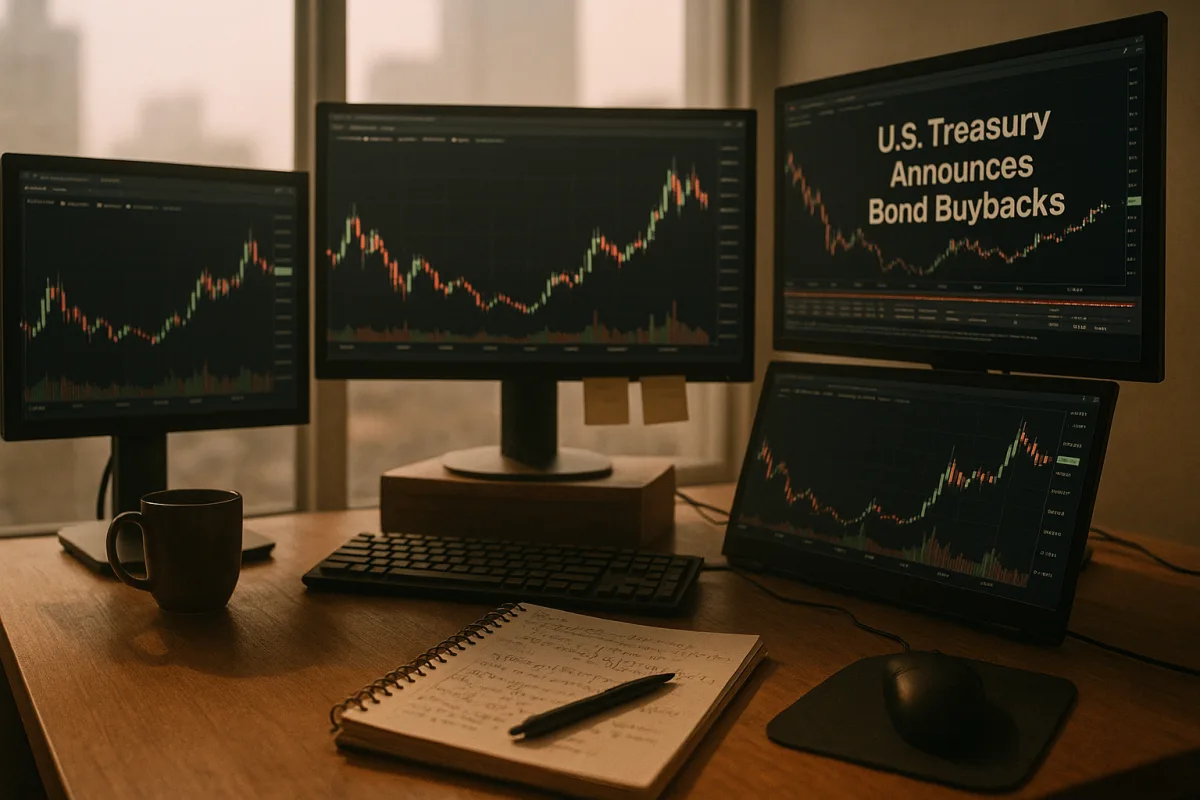
Market Reactions to Economic Signals: A Head-to-Head Comparison of U.S. Treasury Actions and Pakistan's Virtual Assets Act
In recent weeks, the cryptocurrency market has displayed notable volatility, largely influenced by economic signals emanating from the U.S. Treasury and regulatory developments in Pakistan. Bitcoin, for instance, experienced a dramatic surge, climbing nearly 25% to approach $80,000 in response to a Treasury announcement to double its buyback operations for long-dated bonds. Meanwhile, Pakistan's newly implemented Virtual Assets Act promises to establish a regulatory framework aimed at fostering a more crypto-friendly environment. This article examines these two distinct approaches in the context of their potential impact on the cryptocurrency landscape, weighing their merits and drawbacks.
Economic Context and Immediate Market Reaction
The recent rally in Bitcoin's price was catalyzed by a U.S. Treasury decision to enhance its bond buyback operations, increasing the size from $2 billion to $4 billion per operation. This move led to a decrease in long-term Treasury yields, which fell from a 19-year high of 5.34% to around 5.19%. As a result, traders began unwinding a significant number of bearish positions, with approximately 92% of liquidated positions being short-sellers, translating to nearly $2.7 billion in liquidated bets (CoinDesk). The immediate reaction was a sharp price spike, suggesting that the market was highly sensitive to external economic signals, even if the Treasury's intervention was not a direct form of quantitative easing.
On the other hand, Pakistan's Virtual Assets Act introduced a comprehensive regulatory framework after years of a somewhat ambiguous stance on cryptocurrencies. The Act aims to protect consumers and bring virtual assets into the formal economy, providing a clearer pathway for businesses looking to operate in this space. Bilal Bin Saqib, the special assistant to the prime minister on blockchain and cryptocurrency, emphasized the country's openness to foreign investment, inviting companies to establish operations within Pakistan’s framework (Bitcoin Magazine). This initiative comes at a time when Pakistan is looking to leverage its surplus electricity for Bitcoin mining and attract foreign capital.
Risk Assessment: Short-Term Versus Long-Term Implications
While the U.S. Treasury's actions have triggered a short-term price surge in Bitcoin, analysts remain skeptical about the sustainability of this upward momentum. The prevailing view among experts is that the rally was driven more by traders' positioning than by any fundamental shift in market sentiment. Shawn Young, chief analyst at MEXC Research, remarked that the Treasury's intervention should not be overvalued, as rising long-term yields could again pose a challenge to Bitcoin if they continue to increase (CoinDesk). The risk here is that the market remains highly reactive to external factors, leading to potential volatility as investors weigh the benefits of holding Bitcoin against the attractiveness of risk-free Treasury yields.
Conversely, Pakistan's Virtual Assets Act, while providing a regulatory framework, introduces stringent compliance requirements for Virtual Asset Service Providers (VASPs). Analysts have expressed concern that the penalties for non-compliance, which can reach up to PKR 50 million (approximately $179,000) and even potential imprisonment, may deter new entrants into the market (Independent Research Brief). As the country seeks to carve out a niche in the global crypto economy, the long-term implications of such stringent regulations could stifle innovation and hinder the growth of the sector.
Speculation and Market Sentiment: The Role of External Factors
The question of speculation looms large in both scenarios. The recent Bitcoin price surge, attributed to Treasury buybacks, highlights that the market remains susceptible to short squeezes and external economic indicators rather than organic growth factors. For instance, despite Bitcoin's ascent, sentiments reflected by the Crypto Fear & Greed Index reveal a neutral to mildly greedy stance among investors, indicating ongoing indecision (Independent Research Brief). Analysts from various backgrounds note that the rally might be more of a market correction following extensive bearish positioning than a sign of renewed investor confidence in Bitcoin's long-term value.
In contrast, Pakistan's shift towards a more inclusive regulatory framework can be seen as an attempt to mitigate speculative activities by providing clarity. However, the effectiveness of such measures will depend on how well they balance regulation with the need for innovation. The potential for substantial penalties may lead firms to adopt a cautious approach, hindering the growth that the government aims to stimulate. As such, while the intention behind the Virtual Assets Act is to foster a constructive environment, the execution will be critical in determining whether it can attract the desired level of investment and innovation.
Conclusion: A Choice Between Immediate Gains and Long-Term Stability
Ultimately, the choice between the U.S. Treasury's bond buybacks and Pakistan's regulatory framework presents investors and market participants with distinct trade-offs. The immediate gains from U.S. Treasury actions are appealing for those looking to capitalize on short-term volatility, but the underlying risks associated with external dependencies and potential long-term yield increases remain a concern. Conversely, while Pakistan's Virtual Assets Act offers a promising foundation for future growth, the stringent compliance requirements could dampen enthusiasm among new entrants and stifle innovation.
Both approaches have their merits and challenges, making it essential for investors to consider their risk tolerance and investment horizon. The current market dynamics illustrate that external economic signals and regulatory frameworks will continue to shape the landscape of cryptocurrencies, necessitating a cautious approach to navigating this rapidly evolving sector. As analysts continue to monitor these developments, the broader implications for the cryptocurrency market remain uncertain, underscoring the need for a nuanced understanding of both short-term and long-term factors at play.
Frequently Asked Questions
How do economic signals affect cryptocurrency prices?
Economic signals, such as actions taken by the U.S. Treasury, can significantly influence cryptocurrency prices. For instance, the recent decision to double bond buyback operations led to a sharp increase in Bitcoin's price, as traders reacted to the decrease in long-term Treasury yields. This suggests that the cryptocurrency market is highly sensitive to external economic factors rather than solely dependent on organic market growth.
What is the impact of U.S. Treasury actions on Bitcoin?
The U.S. Treasury's actions, particularly the recent increase in bond buyback operations, have resulted in notable short-term price surges for Bitcoin. However, analysts caution that these movements may not indicate a sustainable trend, as the market remains vulnerable to fluctuations in long-term yields and external economic conditions.
How does Pakistan's Virtual Assets Act influence crypto markets?
Pakistan's Virtual Assets Act aims to create a clearer regulatory framework for cryptocurrencies, which could foster a more crypto-friendly environment. However, the stringent compliance requirements and severe penalties for non-compliance may deter new entrants and stifle innovation in the market, potentially limiting the Act's intended positive impact.
Sources
How a Treasury buyback tweak helped bitcoin surge 25% to nearly $80,000 in days, CoinDesk
Pakistan’s Crypto Pitch: “Come Build Here” as Virtual Assets Act Moves Forward, Bitcoin Magazine
Bitcoin price validates Brandt’s $58K call, then breaks out, Cryptonews.net
Trump reaviva el bitcoin, que recupera los 70.000 dólares por primera vez desde junio
US Treasury to double sizes of some debt buyback operations to at least $4 billion | Kitco News
U.S. Treasury Doubles Long-End Buybacks as Yields Rise | GLOBAL ECONOMY NEWS
Stocks Snap Losing Streak as Treasury Yields Ease: Stock Market Today
Pakistan Virtual Assets Act 2026 Explained | Crypto Pakistan
Pakistan parliament passes Virtual Assets Act formalizing crypto regulatory authority | The Block
Pakistan’s Virtual Assets Act is a step forward, but is it enough? - LSE Business Review
SBP Ends 7-Year Crypto Bank Ban, Licensed VASPs Can Now Open Accounts - TaxToday Pakistan
Bitcoin dips under $64,000 as in-line CPI buys the Fed time, not conviction: analysts | The Block
Weekly Cryptocurrency Market Review: Calm Low-Volati... | TrendXBit | TrendXBit
BlackRock says bitcoin sentiment is turning as decoupling from stocks takes hold | The Block
Bearish crypto bets lose record $3 billion as bitcoin tops $71,000
How bitcoin and gold went from a slump to an MVP week in just a few days
Related Articles
Crypto Market Infrastructure and New Financial Products
Explore crypto market infrastructure and new financial products like volatility futures and tokenized settlements with key risks and usage insights.
Crypto Regulatory Developments
Explore key crypto regulatory developments, legal challenges for prediction markets, and stablecoin compliance in the US, EU, and beyond.
Impact of the Clarity Act on Cryptocurrency Market
Explore the impact of the Clarity Act on the cryptocurrency market, including risks, regulatory changes, and implications for investors.

Crypto Regulatory and Political Developments Shaping 2026
Explore key crypto regulatory and political developments in 2026, including the Clarity Act, EU MiCA, and industry election spending impacts.