
Ledger Wallet Supply-Chain Breach Exposes Recovery Phrase
Learn how the Ledger wallet supply-chain breach compromised recovery phrases via reseller implants and what it means for hardware wallet security.
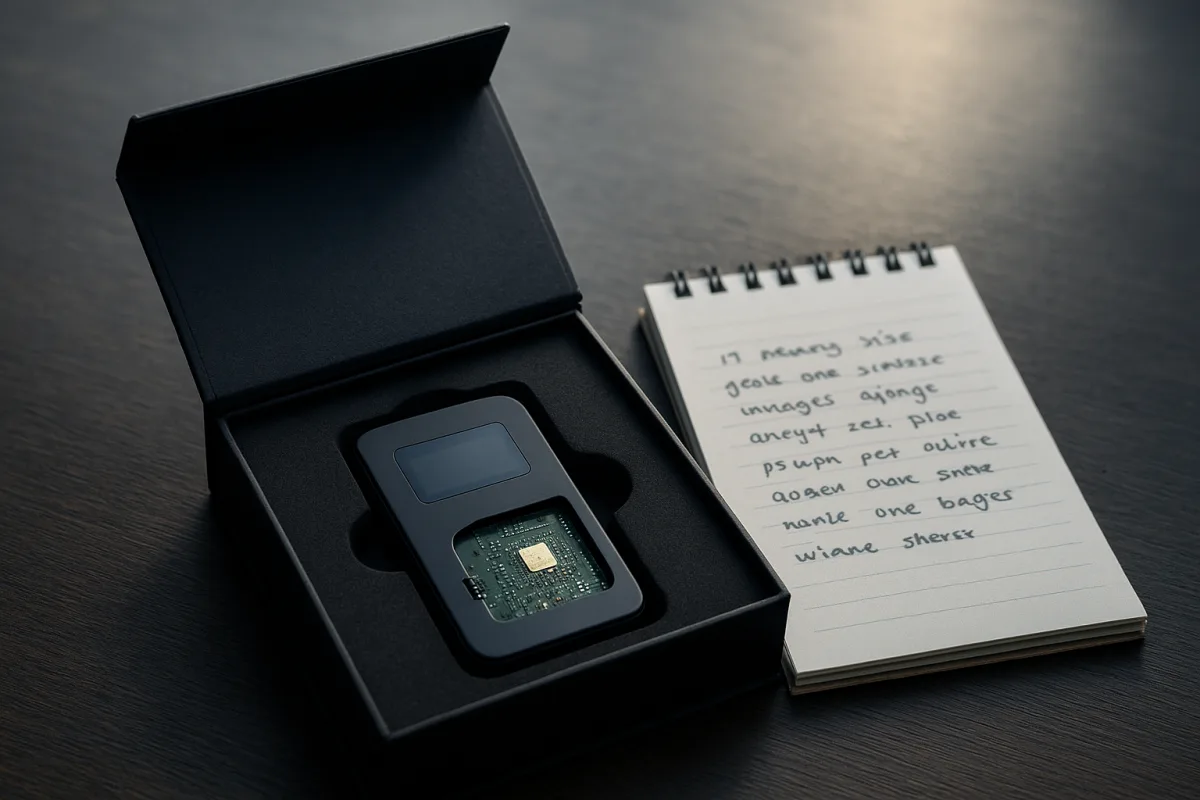
Ledger’s supply-chain breach shows why a hardware wallet is only as secure as its route to the buyer
The breach was in distribution, not necessarily in Ledger’s core hardware
Ledger’s immediate problem is not a conventional remote hack. The company found an unauthorised physical component inside at least one wallet sold by CryptoBilis, a reseller operating in Southeast Asia, and said the component captured recovery phrases displayed during initial setup. [1]
The risk is unusually severe because the recovery phrase is the wallet’s master credential. Anyone who records those 24 words can generally restore the associated wallet elsewhere, then transfer its assets without needing the original device, PIN or physical access.
That distinction matters. A hardware wallet is designed to hold private-key operations away from an internet-connected computer or phone. A compromised distribution chain can defeat that model before the customer creates a wallet, effectively placing an observer inside the setup process.
Ledger said its security researchers found an implant containing a microcontroller and an LTE-capable communications path using an embedded SIM, or eSIM. The component read and decoded the phrase from the device display, then transmitted it through a mobile network. [1]
This was not, based on Ledger’s account, an attack on the device’s Secure Element, the specialised chip designed to protect sensitive cryptographic operations. Nor did it alter how transactions were signed, which is why a customer could plausibly see normal device behaviour. [1]
That is the central security lesson from the incident. A device can retain its advertised cryptographic protections while still failing at the moment its backup credential is shown to the user. The strongest chip cannot protect a phrase already copied elsewhere.
How a screen-reading implant turns a recovery phrase into a loss
A recovery phrase is not a password in the usual sense. It is a human-readable backup for the cryptographic secret that controls the wallet, designed so its owner can recover funds if a device is lost, broken or replaced.
During setup, the hardware wallet generates the secret and presents the recovery phrase to the user. The customer is expected to write the words down offline and keep them private. The device’s screen is therefore one of the most sensitive points in its entire lifecycle.
Ledger’s reported implant did not need to break encryption, discover a PIN or intercept a future transaction. It needed only to observe those words once. The microcontroller could identify the displayed words, reconstruct the 24-word phrase and send it away over cellular data. [1]
The attacker’s cost is front-loaded. They must obtain devices, open them or alter them during distribution, fit the extra electronics, reseal the product plausibly, and arrange a way to receive the cellular data. That is more complex than sending a phishing email.
But the potential payoff is correspondingly larger. A recovery phrase can control every asset later deposited to wallets derived from that backup. It may be worth nothing when the customer activates the device, then become valuable months later as balances accumulate.
This timing also complicates detection. A theft may occur long after purchase, and a victim may suspect malware, a phishing scam, poor backup handling or a compromised computer. The physical device could continue approving transactions exactly as its manufacturer intended.
Ledger has said the implant operated independently of the Secure Element and operating system. [1] That means a routine firmware check may not necessarily identify the threat, because the malicious component’s purpose was surveillance during setup rather than transaction manipulation.
The phrase is the prize because blockchain networks treat possession of the valid signing key as authority. There is generally no card issuer, bank operations team or central administrator able to reverse a confirmed transfer merely because the original owner was deceived or compromised.
That finality is often presented as an advantage of self-custody. In financial terms, it also moves fraud recovery costs onto the holder. The user has operational control, but also bears much of the loss when the credential-generation or backup process fails.
What is confirmed, and what is still speculation
Ledger has confirmed an implant in one affected CryptoBilis device. It has not disclosed the total number of altered units, identified the point in the supply chain where modification occurred, or verified the total losses connected to the episode. [1]
External analysts have attached substantially higher numbers to the incident. Genfinity reported estimates exceeding $93 million, while other published estimates have ranged roughly from $72 million to more than $100 million and linked the activity to hundreds of wallets. [6]
Those figures should be treated as estimates, not settled loss accounting. They may combine blockchain addresses believed to be connected, but attribution is difficult, and Ledger has not independently confirmed either the number of victims or the total value removed. [6]
Tether has reportedly frozen about $10 million in USDT associated with the suspected thefts. [7] That may preserve some value where identifiable stablecoin balances remain on addresses that can be blocked, but it does not establish a full recovery mechanism.
There is also no public indication, as of Oct. 13, of enforcement action against CryptoBilis or MediaMarktSaturn. The lack of a regulatory penalty is not a finding that the retailers were cleared, it more likely reflects the early stage and complexity of investigations.
Reports involving other sellers should likewise be separated from confirmed findings. MediaMarktSaturn removed Ledger products internationally after a customer report from Germany, but Ledger said it had no reported losses tied to that case and no evidence its systems were compromised. [8]
That is a commercially significant response, but not proof that a broader European batch was compromised. Suspected devices, social-media photographs and wallet losses may identify leads for investigators, yet they do not establish common origin without physical examination and forensic evidence.
The reseller crackdown is a cost of weak supply-chain visibility
MediaMarktSaturn’s suspension has an immediate revenue and inventory cost. The retailer removed Ledger products from physical stores and online channels across its countries as a precaution, cutting off sales while the facts remain incomplete. [8]
For Ledger, the cost is broader than lost retail volume. It must inspect submitted devices, communicate with customers, support possible migrations to new recovery phrases, investigate its reseller route and reassure distributors that the issue was not caused by its core infrastructure.
CryptoBilis halted sales after the incident emerged. [1] Whether the modification happened at the reseller, at another logistics point, during warehousing or before the inventory reached the reseller has not been publicly established, which limits attempts to assign responsibility.
That uncertainty is why reseller controls matter. Hardware-wallet makers can manufacture a genuine device and ship authentic stock, but the end-to-end product is secure only if every handoff, storage location, return channel and retail process preserves its physical integrity.
Trezor has been reported as reducing authorised reseller relationships and imposing tighter oversight after the Ledger episode. However, the available independent briefing does not establish a broader, industry-wide policy shift, so claims of a sector-wide crackdown should be treated cautiously.
The commercial calculation is straightforward. A manufacturer can support a large reseller network that expands distribution, or it can reduce the number of partners and inspect a greater share of inventory and handling procedures. It cannot do both without increased compliance spending.
A smaller network may mean less retail reach and fewer local purchasing options. It may also lower the number of storage facilities, staff groups and intermediaries that must be audited. Whether that produces measurably fewer compromises depends on controls, not simply reseller count.
Standards can narrow risk, but cannot make it disappear
The incident puts attention on the difference between internal device security and supply-chain security. A secure element can protect cryptographic material within a device, but it does not automatically detect every external component added to observe the display or transmit data.
ISO 13133:2026, published in September, sets out a security reference model for digital-currency hardware wallets. [10] Its relevance is not that certification can retrospectively solve this case, but that it formalises the wider system that must be assessed.
That system includes device design, key generation, firmware validation, packaging, shipping, storage, authorised sales channels and customer support. Security claims based only on a device chip, or only on open-source firmware, leave out the physical route from factory to owner.
Security audits and third-party scoring systems can provide useful scrutiny, including reviews of firmware and hardware design. [4] They are less conclusive about whether a particular sealed retail unit was modified after it passed a manufacturer’s normal quality checks.
Counterfeit and altered wallet products were already a known problem before the CryptoBilis case. Tom’s Hardware documented a convincing fake Ledger Nano S+ that relied on phishing tactics, illustrating that attackers do not always need a technical break when they can manipulate setup. [3]
The newest case is more concerning because the affected reseller was presented as authorised. That does not mean authorisation has no value. It means buyers should understand it as a distribution control, subject to failure, rather than a cryptographic guarantee.
For Ledger customers who bought from CryptoBilis, the company’s reported guidance was not to initialise the device and to contact support. [1] The underlying logic is simple: once a potentially implanted device displays a new recovery phrase, that phrase may already be exposed.
For the broader market, the event does not demonstrate that all hardware wallets are compromised or that self-custody has become unworkable. It does show that the security boundary is financial and physical at once, with the recovery phrase remaining the most expensive point of failure.
Frequently Asked Questions
What happened in the Ledger wallet supply-chain breach?
Ledger confirmed that at least one hardware wallet sold through the Southeast Asian reseller CryptoBilis contained an unauthorized cellular implant. This implant captured the 24-word recovery phrase displayed during the wallet setup and transmitted it over a mobile network, allowing attackers to steal wallet keys without compromising Ledger’s secure chip or transaction signing.
How did the implant in Ledger wallets steal recovery phrases?
The implant included a microcontroller and an LTE-capable communications path with an embedded SIM. It read and decoded the recovery phrase directly from the device’s screen during setup, then sent the phrase remotely via cellular data. This bypassed the device’s secure element and did not interfere with normal transaction signing, making detection difficult.
Which reseller was involved in the Ledger wallet security breach?
The breach involved the reseller CryptoBilis, which operates in Southeast Asia. Ledger confirmed the presence of the unauthorized implant in at least one device sold through this reseller.
What are the risks of buying Ledger wallets from unauthorized resellers?
Purchasing from unauthorized resellers increases the risk of receiving tampered devices containing implants or other modifications that can compromise wallet security. Even buying from authorized retailers does not guarantee a device is unaltered, but unauthorized channels lack the safeguards and oversight that reduce distribution risks.
How can users protect their Ledger wallets after the supply-chain breach?
Users should only buy Ledger wallets from authorized and trusted retailers to reduce distribution risks. After purchase, users should carefully verify device integrity and be cautious during the recovery phrase setup, keeping the phrase private and offline. If a device is suspected to be compromised, users should avoid using the recovery phrase generated by that device and consider transferring assets to a new wallet created from a trusted device.
How we researched this
This article was assembled from 8 published articles, 10 cited references.
Nothing here is based on hands-on testing. Where a figure or finding appears, it belongs to the source cited beside it, and the writing says so rather than implying otherwise. Every source is listed below so you can check it.
Sources
Federated Hermes joins Wall Street's tokenization push with plans for first onchain fund shares — CoinDesk
Bitcoin Shakes Off Spooky Season Jitters: Can Bulls Keep It Going? — Decrypt
MediaMarktSaturn pulls Ledger products amid tampering reports — Cointelegraph
Ledger’s crypto wallet implant scare triggers Trezor reseller crackdown as security fears spread — CryptoSlate
Trezor Reduces Number of Resellers Following Ledger Drainage Incident — Bitcoin Magazine
Stacks' STX, a Bitcoin layer-2 token, has surged by 50% in four weeks — CoinDesk
Trezor Cuts Its Resellers After Ledger Finds Spy Implant in Crypto Wallets — Decrypt
Ledger details LTE-enabled spy implants in wallets sold by CryptoBilis — Cointelegraph
Ledger finds covert cellular implant stole hardware wallet recovery phrases from screens
Hardware Wallet Comparison 2026: Security Tests & Data – LedgerMind
Tether Freezes $10 Million as Ledger Implant Losses Reach $93 Million | AXT News
MediaMarkt Parent Pulls Ledger Wallets Amid Tampering Reports
ISO 13133 - Digital Currency Hardware Wallet Security Standard
Related Articles

Liquid Network Bitcoin Theft
Explore the Liquid Network Bitcoin theft, partial recovery, and the security flaws behind the $320M exploit affecting federated sidechains.

Trezor Data Breach Expansion: Over 80,000 Customers Affected
Learn about the Trezor data breach expansion affecting 80,000+ customers and how to protect yourself from phishing risks linked to exposed data.

XRP Ledger Supply Bug and Security Patch Explained
Learn about the XRP Ledger supply bug, its integer overflow flaw, and the security patch that fixed this critical vulnerability in 2026.
DeFi Exploits September 2026
Detailed overview of major DeFi exploits in September 2026, including Payy, Duelbits, and Meter security incidents and their user impacts.