
Crypto Scam Infrastructure Seizures
Explore how crypto scam infrastructure seizures disrupt fraud networks and what this means for victims and recovery efforts.
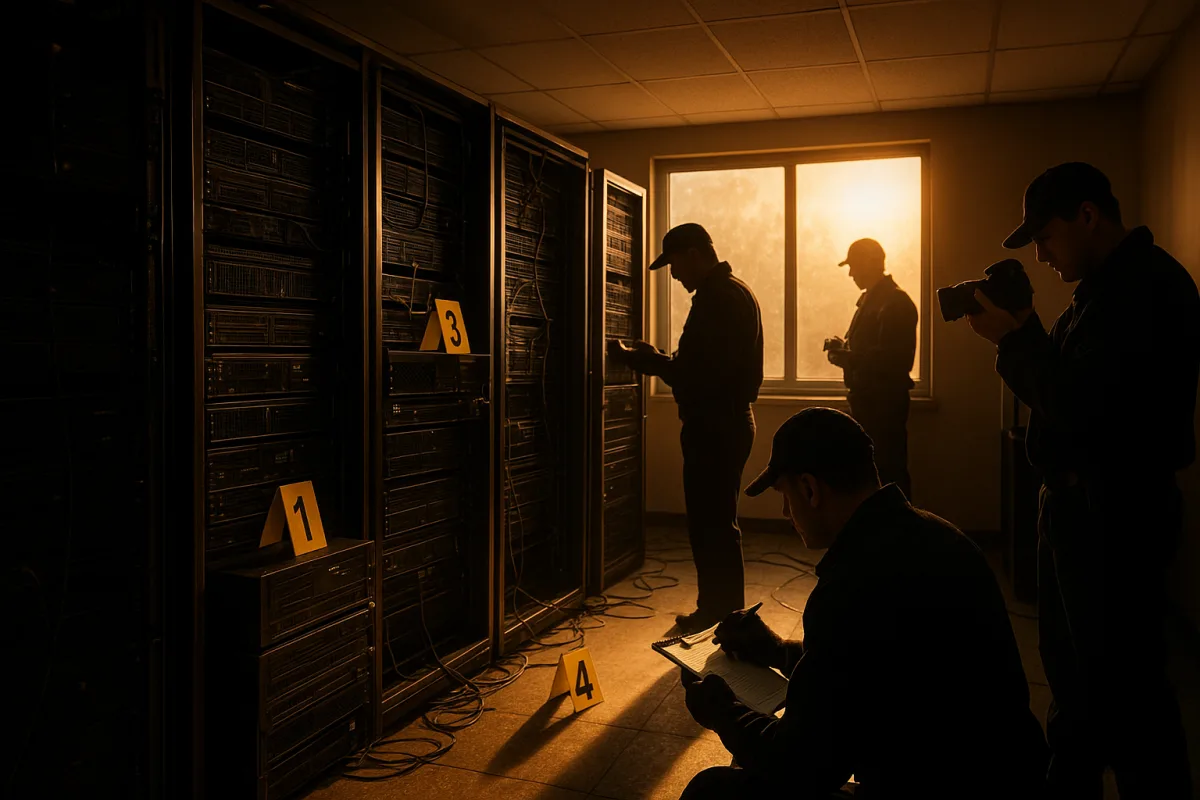
Crypto Scam Takedowns: What Server Seizures Actually Change for Victims
The quick list
- Best overall: Brooklyn DA and FBI server-and-domain takedown, for agencies seeking to interrupt a scam network’s operating infrastructure rather than merely remove its public websites.
- Best for durable disruption: the Brooklyn DA’s earlier domain seizures, for rapid removal of visible scam pages, though the approach proved easier for operators to replace.
- Best for operator attribution: Europol’s KillSec enforcement action, for investigations where searches and arrests can produce evidence against alleged operators as well as remove servers. [8]
- Worst value for victims: private crypto recovery services, for nobody seeking stolen funds, because upfront-fee recovery pitches often form the second stage of the fraud. [3][6]
The decision facing a fraud victim is not which token to buy or which recovery firm to hire. It is whether an enforcement announcement changes the odds of getting money back, and whether a new contact claiming to help is another loss waiting to happen.
The risk is that infrastructure takedowns can look like financial recovery when they are primarily disruption tools. The Brooklyn operation removed a meaningful amount of criminal capacity, but authorities have not disclosed a precise total stolen, and recovery remains a small fraction of estimated losses. [4]
What the Brooklyn action bought, and what it did not
The October 2026 operation by the Brooklyn District Attorney’s Virtual Currency Unit and the FBI targeted a network that allegedly used Russian-language Facebook advertisements to recruit victims in the United States. Investigators seized or disrupted 241 fraudulent domains and 112 servers. [4]
Authorities describe losses as “tens of millions of dollars,” not a confirmed audited total. That distinction matters: the public evidence supports a large fraud operation, but not a precise calculation of aggregate victim losses or a reliable recovery-rate estimate. [4]
About $300,000 had been recovered when prosecutors announced the case. Against losses described only as tens of millions, that is evidence of some asset tracing and seizure, but it is not evidence that victims as a group are close to being made whole. [4]
The layout of the scheme was familiar. Advertising brought in prospects, Russian-speaking callers posed as advisers, and victims were coached through purchasing cryptocurrency and transferring it to a counterfeit trading platform. Withdrawal requests then triggered locked accounts, invented taxes or supposed release fees. [4]
The second layer was more consequential than it first appears. Prosecutors said victim data recovered from the network showed that operators returned weeks after the original fraud with offers to retrieve stolen money, turning a list of prior victims into a pipeline for recovery scams. [4]
That makes the server seizure more valuable than an isolated website closure. A domain can be replaced quickly, while servers may contain customer databases, communications records, software, administration panels and site templates that allow a network to operate at scale. [4]
Brooklyn prosecutors had previously seized or disrupted roughly 400 domains associated with crypto investment fraud. Replacement sites kept appearing, which exposed the trade-off in a domain-only strategy: it is visible and fast, but it can leave the underlying operational structure intact. [4]
Comparison table: disruption, recovery and attribution
| Option | Known scale | Known financial amount | Operating layout targeted | What it achieved | Main trade-off |
|---|---|---|---|---|---|
| Brooklyn DA and FBI, October 2026 | 241 domains and 112 servers | Tens of millions allegedly stolen, about $300,000 recovered [4] | Public scam sites plus servers holding data and software | Made rapid relaunches more difficult and cut access to prior victims [4] | No arrests announced, and most losses remain unrecovered [4] |
| Brooklyn DA’s earlier domain actions | About 400 domains previously seized or disrupted [4] | No consolidated recovery figure disclosed | Primarily public-facing scam domains | Removed fraudulent web destinations | Operators were able to create replacement sites [4] |
| Europol-supported KillSec action, October 2026 | Three arrests, eight searches across four countries [8] | No victim-loss figure supplied in the available reporting | Servers and a ransomware leak site, alongside physical searches [8] | Combined infrastructure removal with a route to collecting evidence from suspects [8] | Cross-border arrest cases are resource-intensive and depend on jurisdictional cooperation |
| Private crypto recovery pitch | 10,516 complaints in 2025 [3] | $1.4 billion in reported losses in 2025 [3] | Direct outreach, often after an initial fraud | Usually extracts additional payments rather than recovering assets | Victims may lose more money and disclose further personal or wallet information [3][6] |
There is no sticker price for these options in the way there is for consumer security software. Law-enforcement operating costs, hosting-provider compliance costs and investigative expenses have not been publicly broken out, so comparing them on budget is not possible from available disclosures.
For victims, the usable price comparison is harsher. The Brooklyn network allegedly stole tens of millions, while the confirmed recovery announced so far is about $300,000. A fraudulent recovery service adds an unpriced but potentially substantial second loss. [4][3]
Why cross-border server seizures matter
The Brooklyn case depended on infrastructure hosted by companies in Eastern Europe and the United States. A local prosecutor’s office could not simply remove foreign-hosted systems unilaterally, so such actions require cooperation among the FBI, foreign authorities and hosting providers. [4]
That operating model is increasingly common in cybercrime enforcement. Europol’s October 2026 action against the alleged KillSec ransomware group involved authorities in four countries, three arrests, eight searches and the seizure of servers and a leak site. [8]
The comparison is useful because the objectives differ. Brooklyn’s disclosed result was disruption at scale, with hundreds of domains and more than one hundred servers affected. The KillSec operation paired technical disruption with searches and arrests, which can strengthen an eventual prosecution. [4][8]
Neither model guarantees a permanent shutdown. Scam and ransomware groups can relocate hosting, register new domains, switch payment rails, recruit new callers or sell victim lists to other criminal groups. The technical cost of rebuilding is often far lower than the victim losses generated by a successful campaign.
Cryptocurrency adds another layer of friction for investigators. Public blockchains can preserve transaction trails, but wallets can be controlled pseudonymously, assets can move across chains, and proceeds can be routed through intermediaries in countries with different disclosure and enforcement standards. [2]
That is why a server seizure should not be read as proof that the organizers have been identified. In Brooklyn, prosecutors disclosed no arrests. The absence does not mean the operation failed, but it limits what can be inferred about asset recovery or the prospect of individual prosecutions. [4]
The recovery-service trap is part of the business model
A victim who has already sent cryptocurrency to a fraudulent platform is often vulnerable to a second approach. The caller may claim to be a blockchain investigator, lawyer, regulator, exchange representative or specialist recovery firm, and may already know details of the original loss.
Those details do not validate the new contact. In the Brooklyn investigation, recovered data indicated that the original network itself attempted to recontact victims with false recovery promises. The prior theft created both the victim list and the credibility material for the follow-on fraud. [4]
IC3 recorded 10,516 complaints tied to recovery scams in 2025, with $1.4 billion in reported losses. Those figures show that the recovery layer is not a marginal nuisance around investment fraud. It is a large criminal category in its own right. [3]
The basic financial proposition is also suspect. Blockchain transfers are generally irreversible once confirmed, and a private party cannot simply reverse a completed transaction. Legitimate recovery may sometimes follow a court order, an exchange freeze or an asset seizure, but those processes are not instant and do not require an upfront payment to a cold caller. [6][7]
Law-enforcement agencies do not charge victims a fee to recover stolen funds. A request for advance payment, remote access to a computer, a wallet seed phrase, private key, or an additional “tax” before release should be treated as a clear danger signal. [6][7]
Hosting providers remain a weak point
The Brooklyn action demonstrates that cloud infrastructure can be seized or disrupted when investigators can identify it and obtain cooperation. It does not show that hosting providers broadly detect crypto fraud before victims send funds.
Public information on specific 2026 anti-scam controls at the relevant Eastern European and U.S. hosting companies remains limited. The market is fragmented: some providers are subject to stronger identity and security expectations, while offshore services can still advertise anonymous or crypto-paid hosting.
That unevenness is central to the trade-off. Know-your-customer checks and abuse-reporting processes may increase friction for criminal customers, but they also vary by provider and jurisdiction. A network that loses one host may be able to migrate to another, especially if it has kept copies of its site infrastructure.
For ordinary users, that means visual indicators of professionalism are nearly worthless. A polished platform, a working support number, a local-language adviser and a dashboard showing apparent gains can all be assembled from commodity hosting, copied software and a scripted sales operation.
Who each option suits
The Brooklyn DA and FBI model suits law-enforcement agencies confronting a repeatable, large-scale investment-fraud operation. Its strongest feature is attacking the infrastructure behind the websites, including the data and software required to contact victims and rebuild platforms. [4]
The earlier domain-focused approach suits urgent removal of public scam pages where investigators have limited visibility into backend infrastructure. Its limitation is demonstrated by Brooklyn’s experience: hundreds of removed domains did not prevent replacement websites from appearing. [4]
The Europol-supported KillSec model suits cases where investigators can coordinate searches, seize systems and pursue identifiable suspects across borders. It offers a clearer route toward attribution and prosecution, but requires more time, international alignment and operational capacity. [8]
For victims, the only defensible category is reporting through law enforcement, the relevant financial institution or exchange, and official fraud-reporting channels. Private recovery pitches should not be treated as an option at all, particularly when they request upfront fees or claim guaranteed blockchain reversals. [3][6][7]
Frequently Asked Questions
What impact do crypto scam infrastructure seizures have on victims?
Infrastructure seizures primarily disrupt scam operations by removing servers that store victim data and scam software, slowing down the network’s ability to relaunch fraudulent platforms. However, these actions recover only a small fraction of stolen funds, so victims are unlikely to see significant financial restitution immediately. The seizures reduce ongoing harm but do not fully compensate for losses.
How do server takedowns disrupt crypto scam networks?
Server takedowns remove critical backend infrastructure such as victim lists, cloned website templates, and scam software, which are essential for the scam’s operation and replication. This disruption is more durable than domain takedowns alone, as it hinders the scammers’ ability to quickly rebuild or continue their fraudulent activities.
Why are server seizures more effective than domain takedowns in crypto scams?
Server seizures target the core infrastructure that supports scam operations, including data and software needed to run and relaunch scams. In contrast, domain takedowns only remove visible scam websites, which scammers can more easily replace. Therefore, server seizures provide a longer-lasting disruption to the scam network.
What challenges remain after law enforcement seizes crypto scam servers?
Even after infrastructure takedowns, law enforcement faces difficulties identifying, arresting, and prosecuting scam operators due to the decentralized nature of scams, operators spread across multiple jurisdictions, and the anonymity of cryptocurrency transactions. These factors complicate coordinated legal action and allow scammers to adapt and migrate to new platforms.
How much money is typically recovered after crypto scam infrastructure seizures?
In the Brooklyn case, authorities recovered about $300,000 against estimated losses described as tens of millions of dollars. This illustrates that only a small fraction of stolen funds is typically recovered following such operations, highlighting the gap between disruption and financial restitution for victims.
How we researched this
This article was assembled from 6 published articles, 8 cited references.
Nothing here is based on hands-on testing. Where a figure or finding appears, it belongs to the source cited beside it, and the writing says so rather than implying otherwise. Every source is listed below so you can check it.
Sources
Brooklyn DA Pulls the Plug on Crypto Scam Network — Bitcoin Magazine
Under pressure Ledger unveils plan to turn its crypto hardware wallet into a smartphone — CoinDesk
Bitcoin, copper, stocks, yields all fall; gold rises — CoinDesk
Bitcoin holds above $80,000 as Asian stock rout drags altcoins lower — CoinDesk
Live updates: Bitcoin trades near $81,000 as South Korea's chip-heavy Kospi continues to plunge — CoinDesk
DA says he shut down 21 sites stealing millions through crypto scams
What happens when law enforcement actions disrupt major illicit crypto infrastructure?
Signs of a Fake Crypto Recovery Service - Blockchain Council
Related Articles

Crypto Scam Enforcement Operations
Explore how crypto scam enforcement operations freeze assets, disrupt fraud networks, and what this means for victims and markets.

AI Integration in Crypto Infrastructure
Explore AI integration in crypto infrastructure, costs, challenges, and how mining sites convert to AI data centers for improved computing.

AI Impact on Cryptocurrency Development and Market Dynamics
Explore how AI affects cryptocurrency development, mining, and market risks amid calls for slower AI progress in crypto infrastructure.

Crypto Market Infrastructure and New Financial Products
Explore crypto market infrastructure and new financial products like volatility futures and tokenized settlements with key risks and usage insights.